
If there’s a book that we have been hearing about quite a lot lately, that’s Moby Dick. Most likely because of Aronofsky’s pedantic reference to it in his latest movie The Whale, a 4:3 vapid, hammy and stagey movie, as Peter Bradshaw put in his merciless yet on point review for The Guardian.
In the movie, Melville’s masterpiece is repeatedly quoted and referred to through an essay for which the protagonist has a true Ahabish[1] obsession. He reads and asks other characters to read over and over again that small essay, which states a couple of pretentious, banal thoughts on one of the most famous pieces of literature ever written. Later in the movie we find out that the essay was written by Charlie’s (the protagonist) supposedly gifted teenage daughter when she was in middle school. When you find out that review was made by a 13 year-old, then it all starts making sense.

Apart from the distasteful idea that Melville’s manuscript is ‘just a pretext of the author to avoid facing his own problems’ (okay?), a positive consequence of paying the ticket for seeing two hours of that is that the film leaves you with a crave for the original story of Moby Dick.
So, here it goes: just a couple of reasons why you should take the dust off your late 90s’ copy of The Whale and give it a try, or a second chance.
Dive in diversity
Better to sleep with a sober cannibal than a drunk Christian
Moby Dick starts with the queerest line (for his times): two men sharing a bed, one omnitattooed pacific islander and the narrator Ishmael.
The writer, outing his characters (and probably coming out himself) in times where this was not exactly common, has been both praised and despised for his supposed queerness throughout the centuries: Virginia Woolf read Moby Dick three times and DH Lawrence called it a “ work of futurism before futurism had been invented”. However, both Melville’s haters and lovers seemed to agree on one point: his book is very, very good.
It echoes everywhere.
It echoes everywhere.
Ignorance is the parent of fear
Probably one of the most quoted piece of literature of the last few centuries, we might have heard of The Whale from the News, cartoons or music: from Edward Said comparing GW Bush to Ahab to the brand name of the most famous coffee brewing company of all times, somehow we must have heard some reference of Melville’s masterpiece.
Imagine how many jokes you’re not getting because you haven’t read it! What are you waiting for? Do yourself a favour and forget about the number of pages, try to focus on the marine landscapes of the late 19th century and you will "See how elastic our prejudices grow when once love comes to bend them."
Call me Ishmael
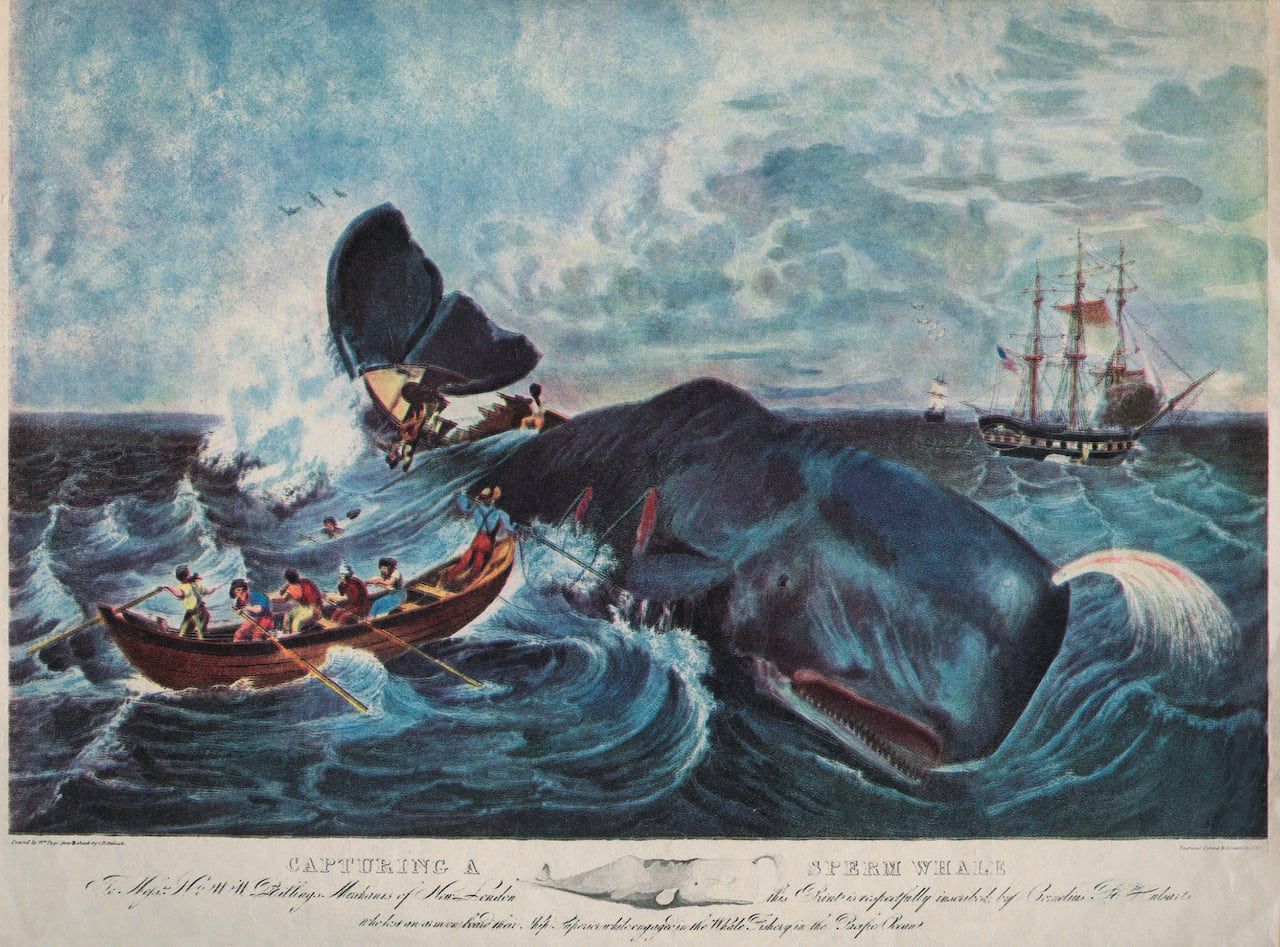
Whether it is for a passion for whales, for good literature, for the sea and its seamen, for finding out how incredible writers were able to sail against the stream or for the sake of reading alone, remember that Moby Dick is not just a book on hunting down a white whale; it is a world full of people, nature, emotions and history, told by a man called Ishmael, sailing on a boat destined to doom.
Ahabish: adjective composed of the suffix - ish, "used to form adjectives to give the meaning to some degree; fairly;" and the name Ahab, the Captain of the Pequod and one of the main characters of the novel Moby Dick, commonly known for his obsession for the white whale from which the book gets its title. ↩︎