
Paraphrasing is a linguistic transformation process through which a source text is reformulated into a target text, maximizing formal (lexical and syntactic) differences while minimizing semantic alterations, with the goal of preserving the core informational content and communicative intent of the original.
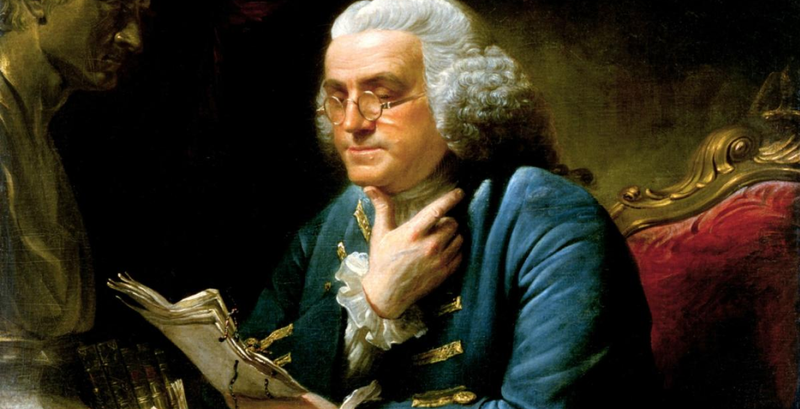
Before the internet, before computers, before electricity, writers who needed to express an idea differently didn't have many options: they could use their own brain, or Roget's Thesaurus.
The famously know Roget's Thesaurus, was firsly published in 1852 by Peter Mark Roget with the title of Thesaurus of English Words and Phrases. It was a revolutionary work that organized the English language not alphabetically, but by meaning, using 1,000 concepts into six Linnaean classifications. For the first time, writers could systematically find alternative ways to express their ideas. This was the world's first paraphrasing tool.
173 years later (I'm writing in 2025), we have AI-powered paraphrasers that can rewrite entire essays in seconds, offering infinite different "tones". Yet , despite the technological advancement we are so produ of, we're still playing the same game Roget invented nearly two centuries ago: swapping words for words without changing the meaning.
Roget's genius wasn't just in collecting synonyms—dictionaries. The core of his innovation was organization by concept. Instead of looking up "happy" and finding "joyful, glad, cheerful" in a linear list, Roget grouped related concepts together, allowing writers to explore the semantic space around an idea. It was a tool for thinking, not just for word-swapping.
Academic paraphrasing in this era was a genuine intellectual skill. When a PhD student needed to incorporate someone else's idea into their dissertation, they had to understand the concept deeply enough to re-express it in their own words. Zero shortcuts, only hard work.
To truly paraphrase, you had to expand your linguistic repertoire—and as Wittgenstein famously wrote, "the limits of my language mean the limits of my world." The constraint was the feature: paraphrasing forced you to push those limits, to stretch your understanding until you could re-express an idea in genuinely different terms. You couldn't paraphrase what you didn't understand.
As one researcher told me during my interviews for the researcher's toolkit article: "In my PhD days, 20 years ago now and before all these tools, paraphrasing was when I really learned the material. I had to wrestle with the text, break it down, rebuild it. Now my students just run it through a tool and move on."
Article spinners and the SEO gold rush
Fast forward to the late 1990s and early 2000s. The internet had exploded, Google's algorithm was king. A few marketers' realization spread through the digital marketing world: more content equaled more traffic, and Google couldn't tell if that content was original.
Article spinners have been the first truly automated paraphrasing tools, and arguably one of the worst thing happened to the English language online.
These early tools were simple: feed in an article and the software would replace words with synonyms from a database. The results were ackwards:
"The quick brown fox jumps over the lazy dog" would become "The fast chocolate vulpine hops above the indolent canine."
Article spinners were the first systematic digital text garbage printing machines that we used to pollute the internet for the god of traffic. Millions incoherent articles flooded the web, creating a toxic layer of linguistic sludge that persists to this day. The irony is that some of those garbage texts are now being ingested by AI language models during training, which then learn to reproduce—and sometimes amplify—the digital garbage.
The trick worked for a while and SEO manipulators generated hundreds of "unique" articles from a single source, flooding the web with keyword-stuffed garbage, while traffic grew.
This fact is quite interesting because it established a precedent that still haunts paraphrasing tools today: the primary use case wasn't to write better, but to trick an algorithm: garbage content, dressed up as original fresh genuine content.
Google eventually caught on, of course. Algorithm updates like Panda (2011) demolished sites built on spun content. But the philosophy—paraphrasing as algorithmic evasion—never really died. It just got more sophisticated.
The machine learning revolution: smarter technology, same philosophy
In the 2010s, natural language processing had made big breakthroughs. Statistical machine learning, and later neural networks, were finally getting better at "understanding" context, grammar, and semantic relationships and the technology was ready to create paraphrasing tools that actually worked.
QuillBot launched in 2017, positioning itself as the academic-friendly paraphraser. Unlike the crude spinners of the 2000s, QuillBot used machine learning to produce genuinely fluent rewrites. Students and researchers flocked to it. Finally, a tool that could help them avoid accidental plagiarism!
Wordtune founded in 2017 arrived in 2020 with a sleek interface and a promise to not just paraphrase, but to enhance your writing's tone and impact. It felt professional and polished. It was backed by the huge Israely-based AI21. According to what AI21 Labs shared about their tech, in 2021 they were apparently using a Jurassic-1 Jumbo, with 178 billion parameters (https://cloud.google.com/customers/ai21/). If we run the numbers, we calculate that training such a model would cost more between $1 and 5 million.
Grammarly, already dominant in grammar checking, added its own paraphrasing capabilities, integrating them into its broader writing assistant ecosystem.
These tools represented a massive technological leap. The AI could now:
- Understand grammatical structure
- Maintain semantic meaning
- Adjust for different tones and styles
- Produce fluent, natural-sounding output
And yet, if you spend any time on Reddit's r/GradSchool or r/AcademicWriting, you'll find a recurring pattern of frustration: AI detectors are flagging AI-rewritten text as AI-generated.
The technology had evolved, but the fundamental model hasn't changed since Articles' spinners: input text → black box transformation → output text. The writer's role remained passive: trust the tool, accept the result, move on.
Even more troubling, as I explored in my recent post on the cat-and-mouse game, many of these same companies now sell both the Humanizer and the AI detector. They're profiting from both sides of an arms race they helped create, with users caught in the middle, endlessly rewriting and humanizing content to chase an ever-moving target of "human-enough" text. This brings us back to the original sin: "the primary use case of wasn't (and still isn't) to write better, but to trick an algorithm: garbage content, dressed up as original fresh genuine content".
The corpus linguistics tradition: a different lineage entirely
While paraphrasing tools were evolving from Roget to robots, an entirely different tradition was developing in academic linguistics: corpus linguistics.
Rather than telling writers what to say, corpus linguistics asked: what do expert writers actually say? Researchers compiled massive databases of published text—academic papers, newspaper articles, novels—and analyzed patterns of real-world usage.
This approach was descriptive, not prescriptive. Instead of rules, it offered evidence. Instead of corrections, it provided examples. The goal wasn't to automate writing, but to illuminate it.
This is the tradition Ludwig inherited when it launched in 2014—not as a paraphraser, but as a linguistic search engine. Our founding idea was radical in its simplicity: what if, instead of telling writers what to write, we showed them how expert writers handled similar situations?
If you were unsure whether to write "different from" or "different than," Ludwig wouldn't give you a rule. It would show you 50 examples of each phrase used in context by professional writers in The New York Times, Nature, The Economist. You could see the patterns, understand the nuances, and make an informed decision.
Our core database—now 300 million sentences from reliable sources—wasn't designed to generate new text but to educate with examples.
The paraphraser is not enough
We do have a neural paraphraser and have had one since 2019. It uses the same transformer-based technology as QuillBot, Wordtune, and the rest. In isolation, it would suffer from the same limitations. But our paraphraser doesn't exist in isolation.
As we see it, the key difference, is about the ecosystem.
When you use Ludwig's paraphraser, you're working within an integrated writing environment where:
You can immediately verify the suggestion against 300 million real-world examples. The paraphraser suggests "obtain the goal," but something feels off? Search it. You'll discover that "achieve the goal" appears several times in academic writing, while "obtain the goal" appears less often. The data empowers you to make the better choice.
Multiple features work in concert, not in competition. Need to paraphrase? Use the rewriter. Unsure if the result is natural? Check the search engine. Want a different register? Explore the synonyms. Need to verify the grammar? The editor catches that too. Each tool validates and enhances the others and the paraphraser is one tool in a toolbox designed to make you a better writer, not a faster one.
What happens when we automate thinking?
There's a broader question here that goes beyond features and pricing: what are we actually doing when we automate paraphrasing?
In the analog era, paraphrasing forced comprehension. You couldn't rewrite someone else's ideas without first understanding them deeply. The constraint was a feature, not a bug.
Modern paraphrasing tools have removed that constraint entirely. You can now "paraphrase" text you don't understand, bypass the cognitive work of comprehension, and produce superficially acceptable output. For students, this is catastrophic. The digital version of the analogic tool that was supposed to help them learn is actively preventing them from learning.
As I argued in my piece on the AI paradox, if you spend 30 seconds generating text with AI and then an hour rewriting it to evade detection, you haven't saved time—you've just outsourced your writing process to a cycle of generation and evasion that benefits the tool company's engagement metrics while making you a worse writer.
The future: not better paraphrasers, but better writers
So where does this 170-year history lead us?
The pessimistic view is that we're trapped in an escalating arms race: better paraphrasers leading to better detectors leading to better evasion tools leading to better detection, ad infinitum. Some companies profit from selling both weapons while some writers get caught in the game.
But there's an optimistic alternative, and it starts with rejecting the premise.
What if the goal isn't to have the best paraphrasing tool, but to need it less?
What if, instead of building better black boxes, we built better learning environments? What if we equipped writers with tools that make them progressively more capable, more confident, more independent?
This is our bet. The paraphraser exists, but it's not the star of the show—it's one instrument in an orchestra. The search engine teaches you what sounds natural. The contextual examples show you how experts handle similar situations. The editor gives you granular control. The rewriter suggests alternatives. But you remain the conductor.
After 173 years of paraphrasing tools, from Roget's thesaurus to today's neural networks, the technology has become extraordinarily sophisticated. But the question we should be asking isn't "how can we make paraphrasing more automated?" It's "how can we make writers more capable?"
Because in the end, the goal isn't to trick a plagiarism detector or to sound more human to an AI. The goal is to clearly communicate your ideas in your own authentic voice. And that's something no paraphraser, no matter how advanced, can do for you.
It's something only you can do. We're just here to help.
Want to experience the difference between a standalone paraphraser and an integrated writing environment? Try Ludwig.